Alton Towers History: The Cursed Earl, the Ruins & the Chained Oak Legend
- #History
- #Cursed
- #Earl
- #Ruins
- #Chained
- #Legend
Uncover the dark history of Alton Towers. We explore the magnificent ruins, the visionary Earl of Shrewsbury, and the chilling legend of the Chained Oak.
Welcome, fellow Towers fanatics, to another deep dive into the magic, mystery, and majesty of our favourite place on Earth. When you think of Alton Towers, what comes to mind first? Is it the gut-wrenching drop of Oblivion? The dizzying inversions of The Smiler? Or perhaps the joyful screams echoing from CBeebies Land? For most, it’s the world-class collection of rollercoasters and attractions. But for those of us who have truly fallen under the park’s spell, the real magic lies at its very heart: the magnificent, gothic, ruined mansion that gives the park its name.
So many visitors blast past it, using the Skyride to bypass the valley, their eyes fixed on the steel giants in Forbidden Valley or the twisted structure of Nemesis Reborn. They're missing the very soul of the park. Today, we’re going to rectify that. We’re not just looking at a theme park; we’re peeling back the layers of time to explore a story of incredible vision, immense wealth, tragic decline, and a chilling curse that continues to be told to this day. This is the story of Alton Towers itself – the house, the gardens, and the legend that defines it. So grab a brew, settle in, and let's journey back in time, long before the first rollercoaster track was ever laid.
The Alton Towers Estate: Before the Rollercoasters
Before it was the sprawling estate of the Earls of Shrewsbury, and centuries before it became a hub of thrill-seeking, the land around Alton was a place of strategic importance. The history of this dramatic Staffordshire valley stretches back much further than the Gothic towers we see today. Perched high on a rocky promontory overlooking the Churnet Valley sits the very real, very ancient Alton Castle. This isn't part of the theme park themeing; it’s a genuine medieval fortress with roots tracing back to the 12th century.
The original castle was built by Bertram de Verdun shortly after the Norman Conquest and served as a key stronghold in the region. For centuries, it passed through the hands of various noble families, a silent stone sentinel watching over the changing landscape. The land itself was known as Alton, or ‘Alveton,’ and the original lodge that would one day become Alton Towers was a relatively simple hunting lodge known as ‘Alveton Lodge.’ It was functional, certainly not the palace it would become.
For generations, this lodge remained a modest country retreat, used by the Talbot family, the Earls of Shrewsbury, primarily for hunting excursions in the beautiful, dense woodlands of the Churnet Valley. The main family seat was at Heythrop Park in Oxfordshire. Alton was a secondary, almost forgotten, part of their vast portfolio of land and property. It was picturesque, yes, but it wasn't a home. It was a place to visit, not to live. It took a man of extraordinary vision, boundless ambition, and a touch of eccentricity to see the potential slumbering in this rugged Staffordshire landscape. That man was Charles Talbot, the 15th Earl of Shrewsbury. Little did he know that his grand project would create a legacy far beyond his own lifetime, one that would eventually become synonymous with screams of joy rather than aristocratic whispers.
Who Was the Earl of Shrewsbury? The Visionary Behind the Towers
To understand Alton Towers, you must first understand Charles Talbot, the 15th Earl of Shrewsbury. Born in 1753, he inherited the title in 1787 and, with it, one of the oldest and wealthiest earldoms in Britain. The Talbots were a prominent Roman Catholic family, which for many years had excluded them from holding the highest offices of state. Perhaps it was this exclusion from the political sphere that funnelled Charles’s immense energy and fortune into a different kind of kingdom-building.
When a fire partially destroyed the family’s main residence at Heythrop in 1831, the 15th Earl decided to turn his full attention to the humble hunting lodge in Staffordshire. He saw something no one else had: the potential to transform the dramatic, rocky terrain of the Churnet Valley into a private paradise, a fantasy palace that would rival any in Europe.
He wasn't just a wealthy aristocrat with a whim; he was a true visionary, a patron of the arts, and a man with a deep appreciation for architecture and landscape design. He began to pour his vast fortune – said to be around £60,000 a year, an astronomical sum at the time – into his Staffordshire project. He wasn't just extending a house; he was creating a masterpiece from the ground up, renaming Alveton Lodge to ‘Alton Abbey’ (though it was never an abbey) and eventually, the name that stuck: Alton Towers.
The Man Behind the Myth
While the legend we'll discuss later paints him as a cold-hearted figure, historical accounts suggest Charles Talbot was a complex man. He was known for his philanthropy and his dedication to his Catholic faith. He was also an obsessive creator. He would travel with his architects, sketching ideas, and was known to be intimately involved in every decision, from the placement of a window to the selection of a specific plant in his gardens. He famously had a mobile drawing office, a carriage fitted with a drafting table, so he could continue his work even while travelling.
He would often be seen wandering the grounds, directing armies of workmen, his mind constantly buzzing with new ideas. This was not a hands-off project delegated to others; it was his life's work, his passion made manifest in stone, glass, and soil. This personal investment is what makes the ruins so poignant today. As you walk through the shell of the Banqueting Hall or stand in the Octagon, you're walking through the tangible remnants of one man's spectacular dream. His vision laid the groundwork for everything we love about the park. It's a powerful thought to consider as you plan your visit – that the park’s layout is still profoundly influenced by the paths he first carved out over 200 years ago.
Building a Palace: The Architectural Marvel of Alton Towers
The transformation of a simple hunting lodge into the Gothic masterpiece of Alton Towers was a project of breathtaking scale and ambition. It wasn't a single project but a continuous, almost obsessive, process of building and expansion that spanned decades, primarily under the 15th and later the 16th Earl. The result was a sprawling, romantic, and slightly chaotic fantasy castle.
The 15th Earl employed several renowned architects of the day, including Thomas Allason, Robert Abraham, and most famously, Augustus Pugin, a leading figure in the Gothic Revival movement. The predominant style was Gothic Revival, which looked back to the medieval period for inspiration, favouring pointed arches, intricate tracery, and dramatic, imposing silhouettes. This style perfectly suited the rugged, romantic landscape the Earl was so fond of.
The Grand Entrance and Key Features
Imagine arriving not by monorail, but by horse-drawn carriage. You would have approached via the ‘Grand Drive’, a long, winding route designed to build anticipation, offering tantalising glimpses of the house before its full glory was revealed. The entrance you would have arrived at is the very one we see today, forming the queue line for the Hex attraction.
- The Talbot Gallery: This magnificent gallery, over 120 feet long, was adorned with the coats of arms of the Talbot family lineage. It housed a significant art collection and had a stunning ceiling of stained glass. Today, its empty windows stare out at Towers Street, but you can still feel the grandeur.
- The Octagon: A beautiful, light-filled room that served as a connection point between different wings of the house. Its ornate plasterwork and large windows were designed to impress visitors the moment they stepped inside.
- The Banqueting Hall: This was the jewel in the crown. A vast hall with a hammer-beam roof, huge stained-glass windows depicting the history of the Talbot family, a minstrels' gallery, and a colossal fireplace. It could seat hundreds for lavish dinners. When you stand in its roofless shell today, looking up at the sky, try to picture it filled with candlelight, music, and the echo of high society chatter.
- The Chapel and Conservatories: Augustus Pugin was commissioned by the 16th Earl, John Talbot, to add a chapel and other features. The chapel was a masterpiece of Gothic design. The great glass conservatories, attached to the house, were engineering marvels of their time, filled with exotic plants from around the world. One of these now serves as the pre-show area for the Hex ride, a clever piece of historical integration.
Pugin's Influence
The involvement of Augustus Pugin is hugely significant. Pugin was not just an architect; he was a design revolutionary who believed in the moral and spiritual superiority of Gothic design. He is most famous for his work on the interiors of the Palace of Westminster (the Houses of Parliament). His work at Alton Towers for the 16th Earl added a layer of architectural purity and Catholic symbolism to the house. The chapel, in particular, was a testament to his genius. Though the house is now a ruin, the strength and beauty of the design philosophy are still evident in the remaining stonework and the building's powerful composition.
The sheer cost and effort were staggering. A workforce of hundreds was employed for decades. Materials were brought in from all over the country and the world. The house became a living, breathing entity, constantly growing and changing, a direct reflection of the Earls' boundless ambition and devotion to their vision. It's a history so rich, it adds a whole new dimension once you know what you're looking at. For true history buffs, having a Merlin Annual Pass is invaluable, as it allows you to return time and time again, discovering new details on each visit.
A Stroll Through the Past: Exploring the Historic Alton Towers Gardens
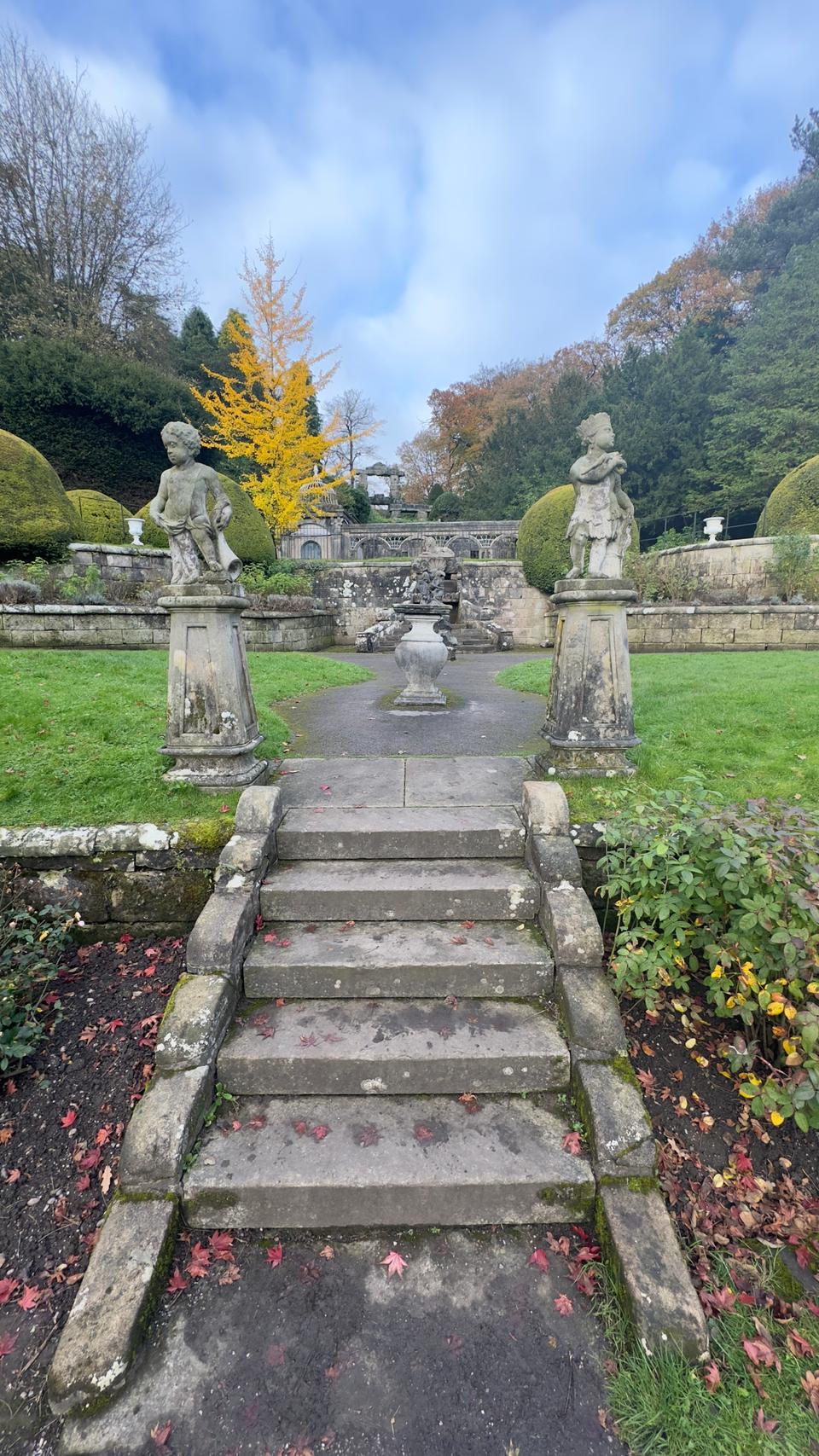
As spectacular as the house was, the 15th Earl’s vision extended far beyond its walls. He saw the entire valley as his canvas. The Alton Towers Gardens are, in their own right, a Grade I listed masterpiece of landscape design, and frankly, they are as much of a headline attraction as any of the park's 'Big Six' rollercoasters.
Rejecting the fashionable, formal, and manicured style of landscape gardeners like Capability Brown, the Earl opted for something far more dramatic and eclectic. He created a series of distinct gardens, each with its own theme and atmosphere, connected by a network of winding paths, rockeries, and water features. He didn't smooth out the landscape; he accentuated its natural drama, using the quarries that provided stone for the house as features in themselves.
A journey through the gardens is a journey around the world:
- The Chinese Pagoda Fountain: At the bottom of the valley, this stunning, multi-tiered fountain is one of the most iconic sights in the gardens. Believed to have been designed by Robert Abraham, it shoots a jet of water over 70 feet into the air, powered entirely by the gravity-fed water from a lake further up the hillside. It’s a work of genius, both artistically and in its engineering.
- The Swiss Cottage: Perched on a rock face overlooking the gardens, this charming cottage was reputedly built for a blind Welsh harpist who would play music that drifted down into the valley below for the Earl’s pleasure. It creates a picture-perfect Alpine scene right in the heart of Staffordshire.
- The Dutch Garden: A more formal, geometric garden with flowerbeds, gravel paths, and a small pool, offering a contrast to the wilder parts of the landscape.
- The Choragic Monument to Lysicrates: A copy of a monument in Athens, this was built in memory of the 15th Earl by his nephew and successor, the 16th Earl. It's a beautiful Grecian folly that you can still see today, dedicated to the man who started it all.
- The Conservatories and Greenhouses: The Earls were keen botanists. The restored Grand Conservatory near the top of the gardens still gives a hint of the horticultural treasures they contained. During the estate's heyday, these glass houses were filled with pineapples, grapes, and exotic flowers from across the British Empire.
The best way to appreciate the sheer scale and beauty of the gardens is to take the Skyride. As you glide from Towers Street towards Forbidden Valley, look down. The view of the Pagoda Fountain, the lawns, and the sheer drop of the valley is breathtaking. This is the view the Earls intended. You can easily access the gardens from the path near the a href="https://unofficialaltontowers.co.uk/rides">complete ride list entrance to Katanga Canyon or by walking down the main path from the back of the Towers themselves. Our interactive park map can help guide you to the main entrance points.
The Legend of the Chained Oak: Is Alton Towers Haunted?
No history of Alton Towers would be complete without delving into its most enduring and famous legend: the curse of the Chained Oak. This is the story that has fascinated visitors for generations, a piece of folklore so powerful that the park immortalised it in one of its most beloved dark rides, Hex – The Legend of the Towers.
The story goes that one cold, autumn evening, the 15th Earl of Shrewsbury was returning to the Towers in his carriage. As he passed through the woods on his estate, an old, haggard woman suddenly appeared in the road, forcing his carriage to a halt. She was a local woman, some versions of the tale say a beggar, others a destitute widow. She pleaded with the Earl for a coin, but he, in a foul mood and dismissive of her plight, cruelly rebuffed her and ordered his coachman to drive on.
Enraged by his cold-heartedness, the old woman raised a trembling hand and placed a curse upon him and his family. She proclaimed: “For every branch on the old oak tree that falls, a member of your family will die.”
The Earl scoffed and continued on his way. But that very night, a ferocious storm battered the estate. A single, mighty branch from a prominent old oak tree was torn from its trunk by the gale-force winds and crashed to the ground. That same night, a member of the Earl’s family suddenly and inexplicably died.
Struck by terror and consumed by guilt, the Earl now believed wholeheartedly in the power of the curse. He ordered his servants to go out to the ancient oak tree and wrap it in heavy iron chains. His desperate logic was that by binding the branches to the trunk, no more could fall, and his family would be safe from the curse. And so, the tree became known as the Chained Oak, a permanent, gnarled monument to the Earl's cursed encounter.
Fact vs. Fiction
Is the story true? Almost certainly not. There is no historical record of the 15th Earl having such an encounter, nor of a sudden death in the family coinciding with a storm. The 15th Earl died peacefully, and the family line continued. The story appears to be a classic piece of local folklore that grew over time, possibly embellished during the period when the Towers were first opened to the public in the 1920s to add a bit of spooky intrigue for visitors.
However, the Chained Oak itself is very real. It stands to this day in a patch of woodland near the village of Alton, just outside the theme park boundaries. It is a gnarled, ancient tree, and it is indeed wrapped in heavy, rusting chains. Why the chains are there is a mystery. The most likely explanation is that they were placed there by a later resident or landowner to support the ancient, fragile tree and prevent its branches from collapsing under their own weight—a practical act of preservation. Another theory suggests it was a local stunt to draw in tourists after the story became popular. Whatever the real reason, the sight of it is undeniably eerie and seeing it in person makes the legend feel chillingly plausible. While we do not recommend trying to find it (it’s on private land and can be difficult to access), its legend permeates the very atmosphere of the park. It's this powerful blend of history and myth that makes a trip to Alton Towers so unique. To ensure you have enough time to soak in this atmosphere, why not book a short break and stay over at one of the resort hotels?
From Private Paradise to Public Spectacle: The Decline and Sale of the Estate
The golden age of Alton Towers could not last forever. The 16th Earl, John Talbot, continued his uncle’s work, but after his death in 1852, the earldom passed to a distant cousin, and a protracted and costly inheritance dispute began. The huge financial burden of maintaining such a vast house and gardens, combined with the family's dwindling fortunes, started to take its toll.
By the early 20th century, the family had largely abandoned Alton Towers as a main residence. The house began to fall into a state of disrepair. The final blow came in 1924 when the remaining Talbot family sold the entire estate to a consortium of local businessmen, led by a man named William Bagshaw. The grand contents of the house – the paintings, the furniture, the armour, the library – were auctioned off in a sale that lasted for almost a month. The soul of the house was stripped and scattered.
The new owners saw a commercial opportunity. They opened the house and the magnificent gardens to the public as a tourist attraction. This was the birth of Alton Towers as a public spectacle. Throughout the 1920s and 30s, visitors would flock to see the ‘Gordian Knot of England’, to wander the ornate rooms (now mostly empty) and marvel at the gardens. It became a popular destination for day-trippers. However, this period of public access was to be cut short by the outbreak of the Second World War.
The War Years and Beyond: How Alton Towers Served the Nation
When war broke out in 1939, the estate was requisitioned by the War Office. Alton Towers was transformed into an Officer Cadet Training Unit for the British Army. The grand rooms that once hosted lavish parties now served as dormitories, classrooms, and mess halls for soldiers. The beautiful gardens and grounds became training areas for military drills and exercises.
While this was a vital contribution to the war effort, it took a heavy toll on the house. The delicate interiors were damaged, and the structure suffered from neglect. After the war, the house was handed back to its owners, but it was a shadow of its former self, a hollowed-out shell. The cost of restoration was deemed impossibly high.
Tragically, the decision was made to ‘de-roof’ large parts of the house and remove the floors to avoid paying crippling property taxes on an uninhabitable building. The lead from the roof was sold for scrap. This was the moment the house truly became the ruin we see today. Exposed to the elements, the magnificent plasterwork crumbled, the woodwork rotted away, and nature began to reclaim the Earl’s palace. By the 1950s, the once-proud house was a romantic, derelict ruin, while the gardens continued to be maintained as a visitor attraction by the Bagshaw family.
The Tussauds Era: Birth of the Theme Park We Know and Love
The 1960s and 70s saw the beginnings of what we'd recognise as a modern attraction. Fairground rides began to appear on the lawns, a concrete boat lake was installed, and the focus shifted more towards simple amusements. But the major turning point came in 1973 with the opening of the Corkscrew rollercoaster. This was a game-changer. The iconic double-inverting coaster, built by Dutch firm Vekoma, put Alton Towers on the map as a destination for thrill rides. You can see its famous corkscrew inversions preserved as an iconic entrance feature near Oblivion today.
The park's potential was now undeniable. In 1990, The Tussauds Group, then-owners of Madame Tussauds and Chessington World of Adventures, purchased Alton Towers. This was the moment the modern theme park was truly born. Tussauds invested millions, bringing in world-class designers and ride manufacturers to create themed areas and blockbuster attractions. Rides like the Thunder Looper, The Beast, and the Haunted House paved the way for the giants to come.
Under Tussauds, and later Merlin Entertainments, the park developed its signature philosophy: building new, world-first attractions that respect the natural beauty and historical constraints of the landscape. Height restrictions mean that many of the biggest rides, like Nemesis and Oblivion, are built down into pits and gullies excavated into the earth, preserving the views of the surrounding countryside. This sensitive approach to development is a direct legacy of the Earl’s original vision. For anyone serious about theme parks, getting a Merlin Annual Pass is the best way to follow the park's evolution, allowing you to visit multiple times a year and see the latest developments first-hand. Check out the latest developments over on our Alton Towers news page!
How to Explore the Alton Towers Ruins and Gardens Today
One of the best things about a trip to Alton Towers in 2025 and beyond is that this incredible history isn't hidden away; it's right there for you to explore. It’s the backdrop to your entire day.
Accessing the Towers
The most prominent part of the ruins forms the entrance and queue line for Hex. You can walk right through the original main entrance of the house, stand in the Octagon, and peer into the remains of the armoury and library. The queue itself winds through a covered section that was once part of the house, now filled with artefacts and storyboards explaining the legend.
Best Viewing Spots
- From Towers Street: As you enter the park, look up and to your left. You'll see the imposing facade of the Towers. This is one of the most photographed views in the park for a reason.
- The Skyride: The cable car provides an unparalleled aerial view of the entire central part of the estate, including the Banqueting Hall, the gardens, and the chapel. It’s a must-do for a sense of scale.
- The Lawns: Stand on the vast lawns that slope down from the back of the Towers. From here, you get a sense of how the house and gardens were designed to work together as one cohesive landscape.
Exploring the Gardens
The main garden valley is a peaceful oasis away from the hustle and bustle of the main park. You can access it via a path that leads down from the back of the ruins or from the path connecting Mutiny Bay to Katanga Canyon. Take at least an hour to wander. Don't rush. Follow the winding paths, discover the hidden follies, and definitely make your way down to the Pagoda Fountain. In spring and summer, the floral displays are simply stunning. Many guests completely miss this area, which means it can be wonderfully quiet even on the busiest days. It's the perfect place to decompress after tackling The Smiler. Check the live queue times on your phone, and if your favourite rides have long waits, a detour into the gardens is the perfect solution.
SECRET WEAPON: How Hex – The Legend of the Towers Brings the Curse to Life
Opened in the year 2000, Hex – The Legend of the Towers is, for many of us, the single best attraction in the park. Why? Because it’s not just a ride; it’s a history lesson, a ghost story, and a stunning piece of immersive theatre all rolled into one. It is the perfect fusion of the old Alton Towers and the new.
Located within the original armoury, Talbot Gallery, and library sections of the ruins, Hex takes the legend of the Chained Oak and brings it to life with breath-taking effect. It’s not a rollercoaster; it’s an intense, psychological dark ride.
The Experience, Scene by Scene
- The Queue Line: You begin by queuing through the original entrance hall and Octagon, with video screens setting the scene. They present the story as a modern-day paranormal investigation into the legend, blurring the lines between fact and fiction from the very beginning.
- The Cinema: You are ushered into what was once the Armoury. Here, a beautifully produced film tells the story of the curse. It shows the 15th Earl, his cruel dismissal of the old woman, and the horrifying consequences. The presentation is theatrical and compelling, drawing you completely into the narrative.
- The Vault (Pre-Show): You are then led through a secret passage into a newly ‘excavated’ octagonal chamber – the legendary vault. Here, amidst archaeological equipment and strange runes, you find it: the fallen branch itself, chained and pulsating with an eerie light. The voice of a researcher explains they have unearthed the vault where the Earl tried to contain the branch's dark power, and they are about to conduct an experiment to seal the curse forever. This is classic dark ride storytelling at its finest.
- The Ride Room: Finally, you take your seats in what appears to be the main chamber of the vault. You are seated in two long rows facing the chained branch, which is now the centrepiece of the room. The lights dim, the music swells, and the experiment begins. The ride itself is a Vekoma Madhouse, a genius illusion. The benches you are sitting on swing back and forth by a mere 15 degrees each way. However, the entire room around you – the walls, the ceiling, the floor, and the branch in the middle – is a giant, rotating drum that spins a full 360 degrees around you. The effect on your brain is extraordinary. It creates the powerful, disorienting sensation that you are the one flipping upside down, tumbling through the darkness, as the branch's supernatural energy is unleashed. It’s a sensory masterpiece that has to be experienced to be believed.
Hex is more than just a ride; it’s a tribute. It respects the history, celebrates the legend, and uses modern technology to create an unforgettable experience that is totally unique to Alton Towers. It’s a must-do for every visitor, and one of the many reasons that unlimited visits with an Annual Pass offer such incredible value – you'll want to ride it again and again.
Insider Tips for Experiencing Alton Towers' Rich History
To get the most out of the historical side of your visit, here are a few insider tips from a seasoned regular:
- Arrive Early, Stay Late: The first hour and the last hour of the day are golden. If you're a history fan, use the early part of the day, before the main ride queues build, to walk the gardens. They are incredibly peaceful in the morning light. Our detailed plan your visit guide has more tips on timing your day.
- Ride Hex at Night: If you’re visiting during Scarefest or other late-opening events, try to experience Hex after dark. Queuing through the genuinely spooky, dimly lit ruins at night adds a whole new layer of atmosphere to the experience.
- Don't Skip the Skyride: I know I’ve said it before, but I’ll say it again. Even if you're fit and happy to walk, take the Skyride at least once purely for the views of the house and gardens. It helps you understand the layout of the Earl's vision in a way you can't from ground level.
- Look for the Details: As you walk around the ruins, look for the small details. Notice the intricate stone carvings of faces and gargoyles around the windows. See the faint traces of plasterwork in sheltered corners. These are the last vestiges of the master craftsmen who built this place.
- Take a Break on the Lawns: Don't just eat on the go. Grab a bite from one of the nearby food outlets and have a picnic on the lawns behind the Towers. It's the best lunch spot in the entire park, offering million-pound views for the price of a sandwich.
Why Every Alton Towers Visit Should Include a Trip Back in Time
Alton Towers is a park of thrilling contrasts. It’s a place where the futuristic, G-force-pulling steel of Oblivion sits just a stone's throw from a 200-year-old Grecian monument. It’s where screams of terror from The Smiler mix with the gentle sound of a gravity-fed fountain designed in the Georgian era. This is what makes it so special. It isn’t an artificial world built on a featureless plot of land; it’s a modern marvel woven into the fabric of a deep and dramatic history.
To ignore the Towers, the gardens, and the legend is to miss the very essence of the park. Understanding the story of the Earl, his magnificent vision, and the tragic curse adds a profound depth to your visit. It transforms the ruins from a simple backdrop into a character in their own right. You're not just at a theme park; you're walking in the footsteps of Earls, soldiers, and ghosts.
So next time you visit, I urge you, take a moment. Stand on the lawns and just look at the house. Wander the quiet paths of the gardens. Let the story of Hex send a shiver down your spine. Connect with the history that started it all. Because the soul of Alton Towers isn't in the steel or the speed; it's in the stones of that beautiful, broken-down palace and the enduring legend that still haunts its halls.
Ready to walk through history and experience the thrills for yourself? There’s no time like the present to explore the past. Book your tickets now and prepare for an unforgettable adventure through time.
Unlock the Magic.
Secure your entry to the UK's most legendary theme park — your details pre-filled at the official checkout.
Opens on altontowers.com. We may earn a commission on bookings made through this link — at no extra cost to you.
You might also like
Hand-picked from the topics covered in this post.